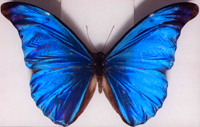

Now that I've got your attention, allow me to introduce you to one of the wackier aspects of insect development ... the bilateral gynandromorph. This isn't restricted to insects: indeed, documented instances in the literature are known from crustaceans (numerous lobsters and crabs), and, most bizarrely of all, from birds. But it's the Lepidoptera that provide perhaps the most spectacular examples of this phenomenon. I'll reprise a post I posted elsewhere for your delight and edification on this subject.
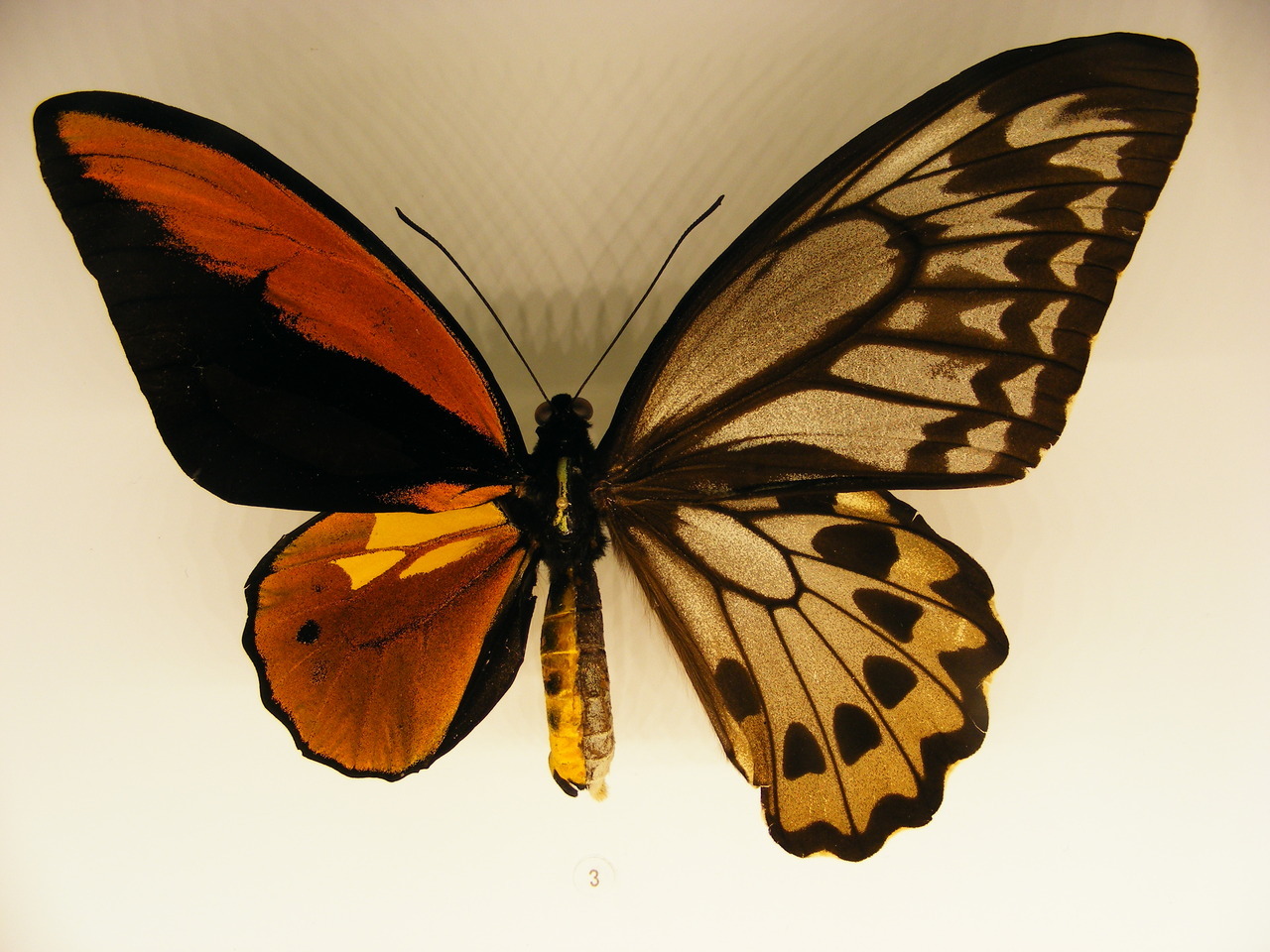
What is a bilateral gynandromorph? Simply put, it's an organism that is half male, half female, divided lengthways. The world of Lepidoptera has provided scientists with a large number of these curiosities, and it's appropriate to exhibit some examples. These are particularly spectacular in the case of species exhibiting considerable differences between male and female individuals. For example, here's a Birdwing butterfly, male left half, female right half:

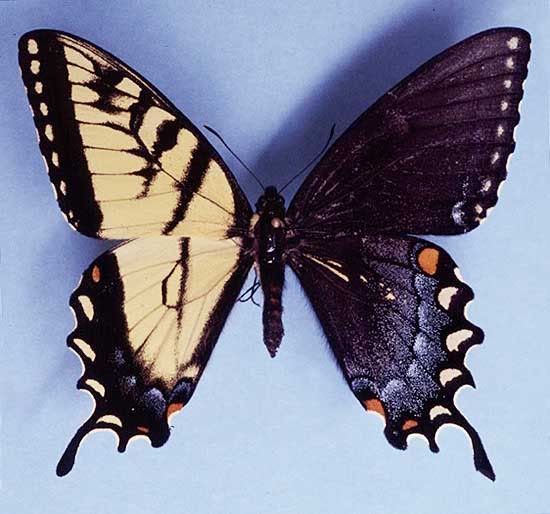
Here's a Papilio glaucus bilateral gynandromorph:
Here's a bilateral gynandromorph of Hypolimnas bolina, male left side, female right side:

It turns out that this developmental curiosity appears in organisms other than insects. How about this crustacean?

Here's another Birdwing species, this time Ornithoptera croesus :
From the UK fauna, I found this image of a bilateral gynandromorph of the Orange Tip, Anthocaris cardamines, left side female, right side male:

The phenomenon can even be observed in birds. Here's a particularly spectacular example:

This phenomenon is even more spectacular to observe in Lepidoptera species whose females are wingless, or have reduced wings. Sadly I can't find any photographs online, but a couple of specimens are known from UK species alone, such as the Winter Moth, Opheroptera brumata, and if memory serves, the definitive book on UK moths by Bernard Skinner features at least one such gynandromorph in the plates. However, what is even more spectacular about these gynandromorphs, is that the left-right division extends to internal anatomy, including genital anatomy.
A case in point is provided by this paper:
A Bilateral Gynandromorphic Harmaclona tephrantha From Indonesia[/i] by Donald R. Davis, Tropical Lepidoptera, 5(2):, 117-122 (1994) [Full paper downloadable from here]
The most amazing feature of this paper is the diagram illustrating the dissected genitalia, which are female left side, male right side. I've extracted the illustration from the paper specifically to show how bizarre this is:Davis, 1994 wrote:ABSTRACT.- The external morphology of a bilateral gynandromorphic tineid moth, Harmaclona tephrantha (Meyrick), is discussed. Both male and female sexual characters are approximately evenly divided between the left (female) and right (male) halves of the body, as shown by wing, abdominal, and genital structures. A brief review of the causes of gynandromorphism is provided, along with references to previous publications which discussed the genital morphology of gynandromorphic Lepidoptera/